How an Orthopedic Group has Saved $2.3M+ and Streamlined Operations Over the Last 5 Years with Holly AI
Overview:

Overview:
Note: The medical group featured in this case study has chosen to remain unnamed.
Overview:
Overview:
The rise of Artificial Intelligence (AI) in various industries has been undeniably transformative. Renowned players like ChatGPT, Google Bard, and Amazon's Alexa have showcased the prowess of AI. As its prominence grows, many wonder about the potential applications of AI in the healthcare sector.
One of the most promising uses of AI in healthcare revolves around enhancing the patient experience and bolstering operational efficiency through automation. Central to this is Natural Language Processing (NLP) technology, a subset of AI that facilitates computer understanding of human language. Through NLP, machines can grasp the intent behind words, enabling seamless interactions with users.
For healthcare practices, this technology means the potential to handle tasks like appointment scheduling or answering patient inquiries via text, eliminating the need for additional app installations. A leading example of this capability is Holly AI Assistant, which expertly manages incoming calls, texts, and web visits, navigating the intricacies of scheduling and follow-ups just as a human would.
Here are a few benefits of resorting to AI Automation when it comes to scheduling workflows:
Have you spent hours scouring the web for the right resources to use with patients, tools for your practice, or content to improve professionally? We know you have. We...
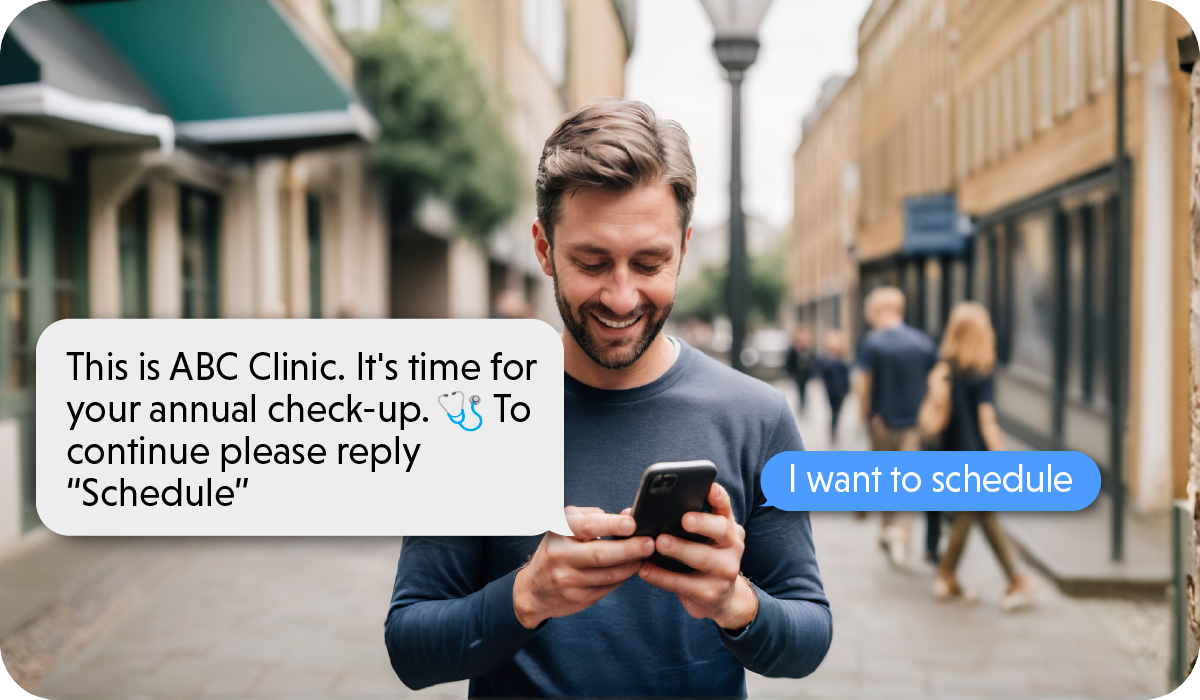
Patients have several types of recurring treatments: Bi-annual teeth cleaning, annual physical, eye exams, etcetera. These are typically booked long-term, far in advance; hence, very easy to forget and book over. No one to blame here. From the practice's perspective, they're also too busy with other urgent tasks and current patients to manually call and remind old patients it's time to book that followup.